
the chapel of st george
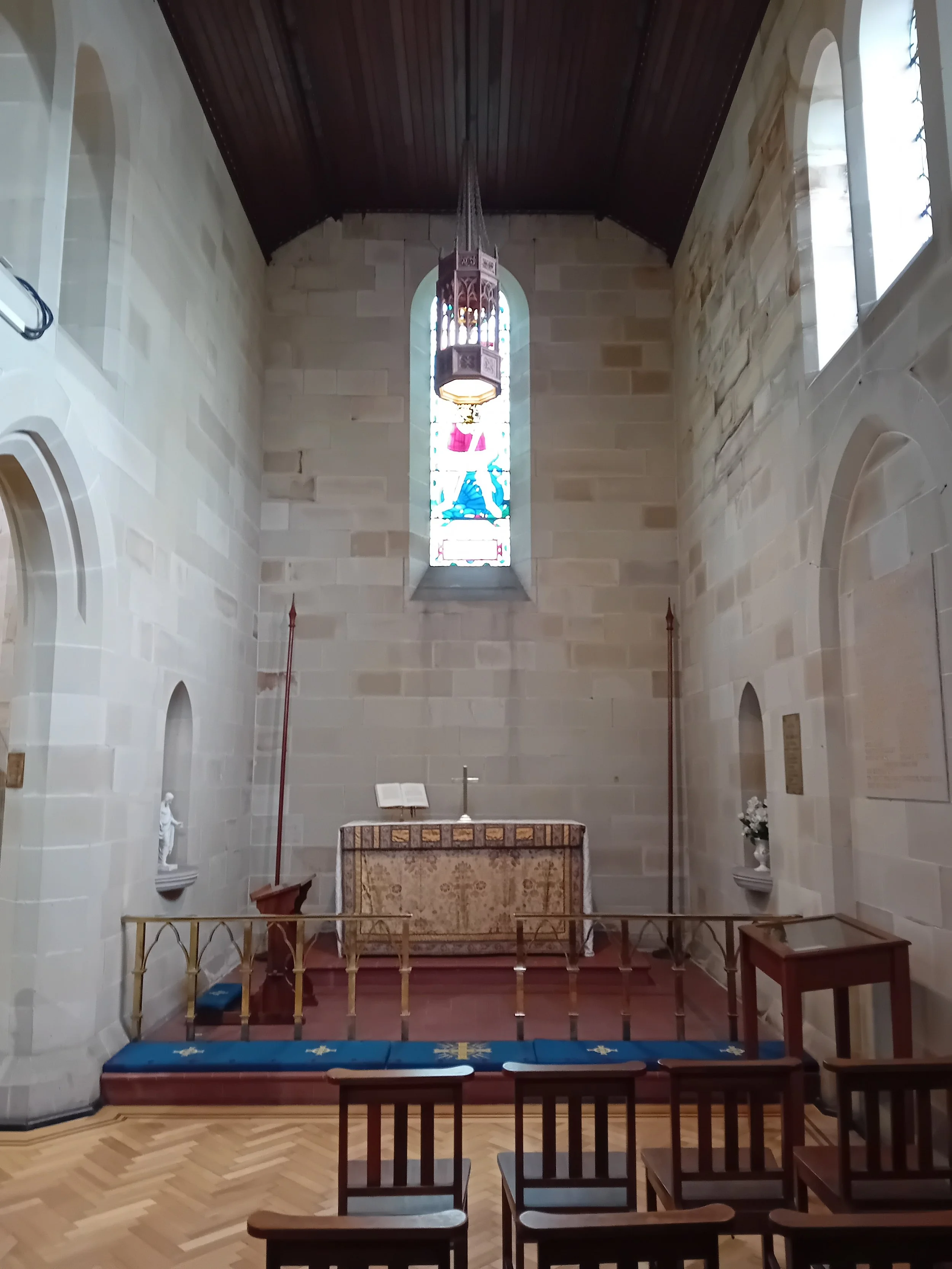
the chapel of st george
The Warriors’ Chapel of St George is a memorial shrine and one of the two reasons that St Mark’s has been given a heritage listing.
Try to imagine the environment that St Mark’s church planners found themselves in, in 1926, when the church building was being conceived just 8 years after the conclusion of the Great War (WWI). Their grief for the St Mark’s parishioners who were lost at sea, or buried overseas, perhaps in unknown graves, would have evoked deep emotions for them.
What makes this ‘Chapel of Remembrance’ significant is that, while hundreds of other communities were building memorials outdoors in parks or on street corners, the people of St Mark’s Camberwell elected to build their memorial inside their church, and we are the beneficiaries.
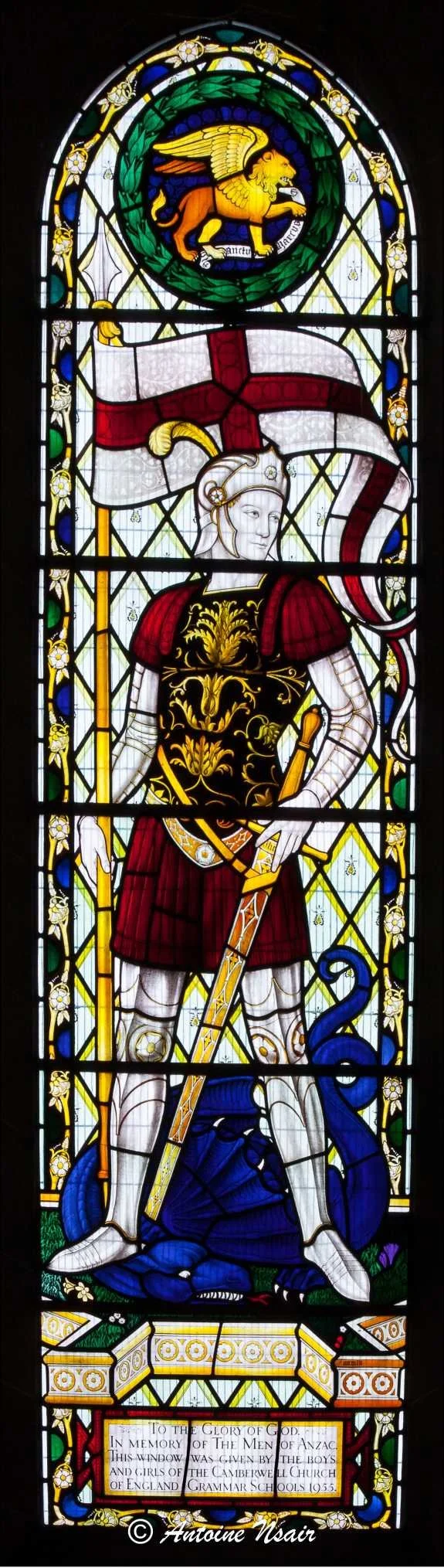
The Window of St George was designed by Sir Ninian Comper and depicts the victorious St George the Warrior wearing the cuirass of a Roman soldier while holding a standard of the English flag aloft over the slain dragon.
It was a gift of Camberwell Grammar School and Camberwell Girls Grammar Schools, unveiled on 6 November 1955.
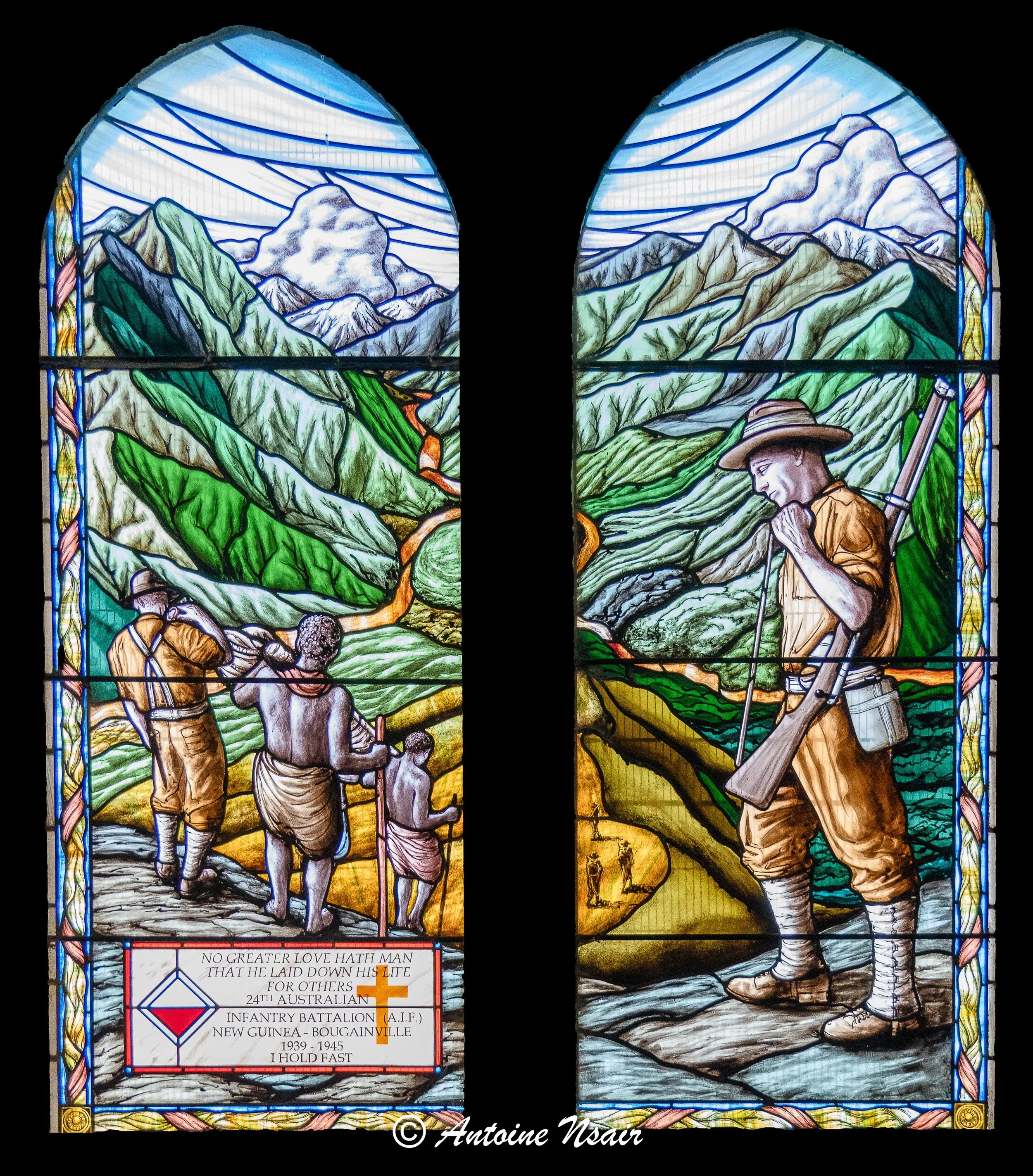
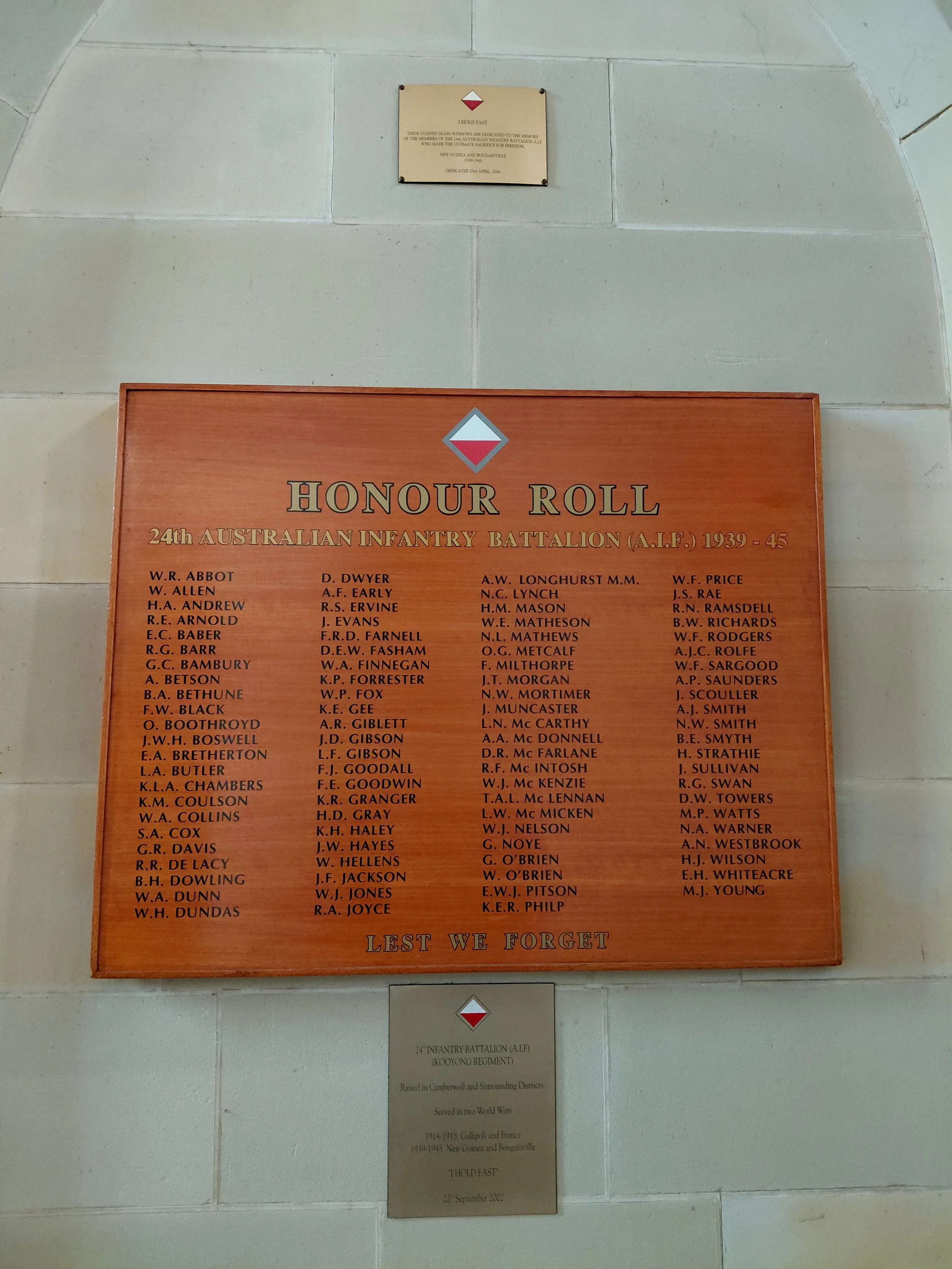
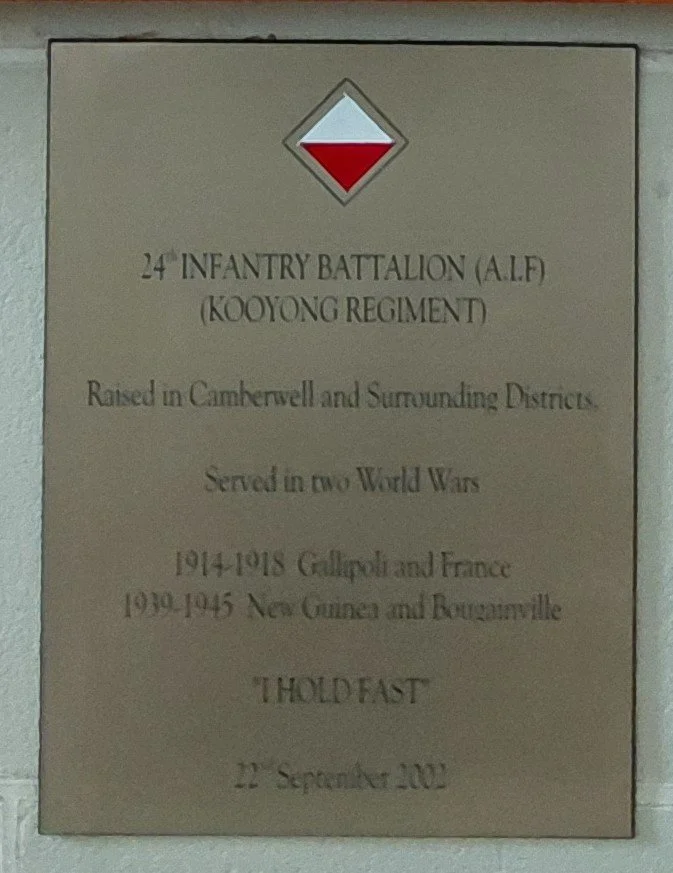
The New Guinea - Bougainville Window was dedicated to the memory of the 24th Australian Infantry Battalion (AIF) regiment that served in WWII. It was dedicated on 23 April 2006
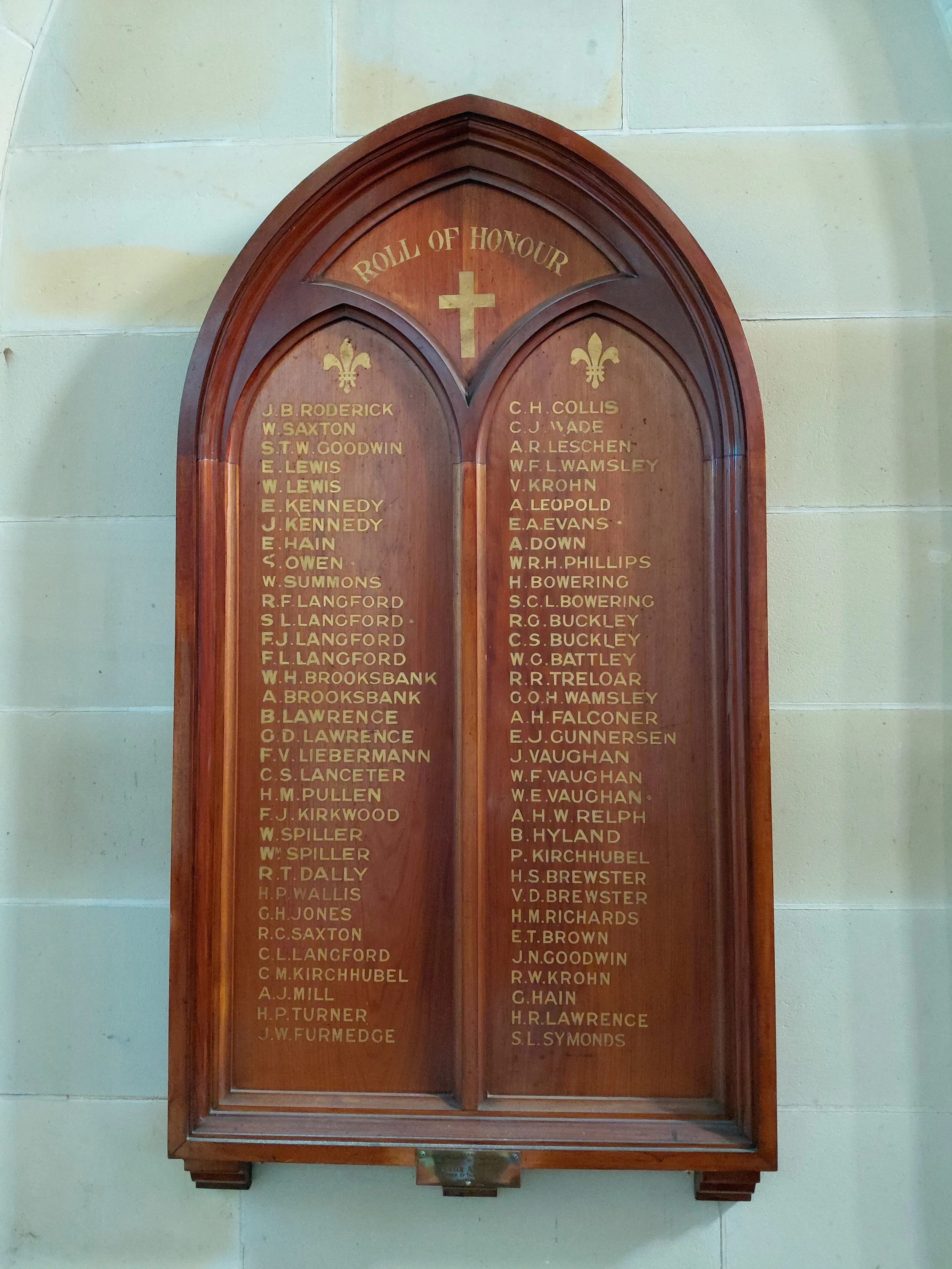
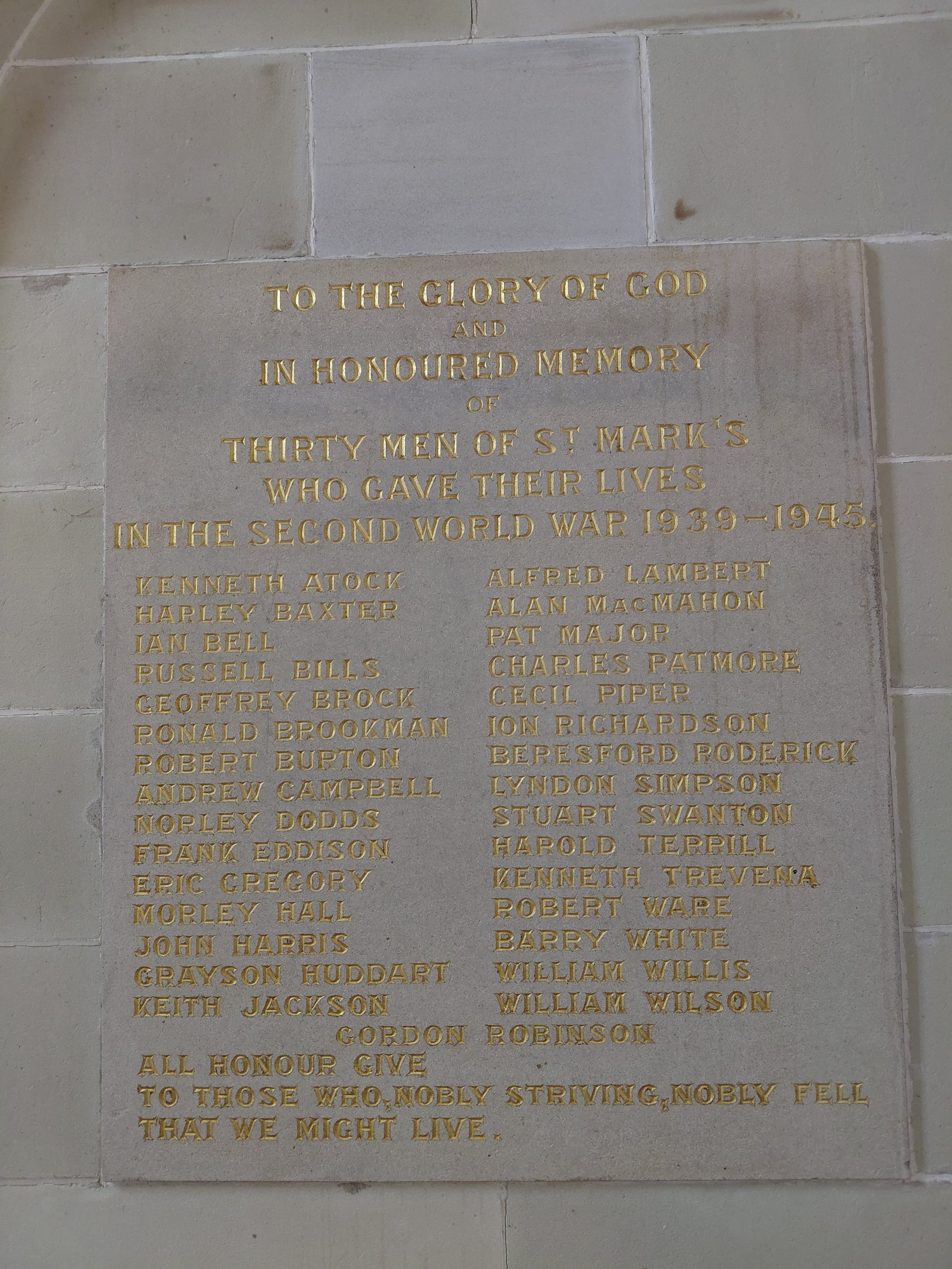
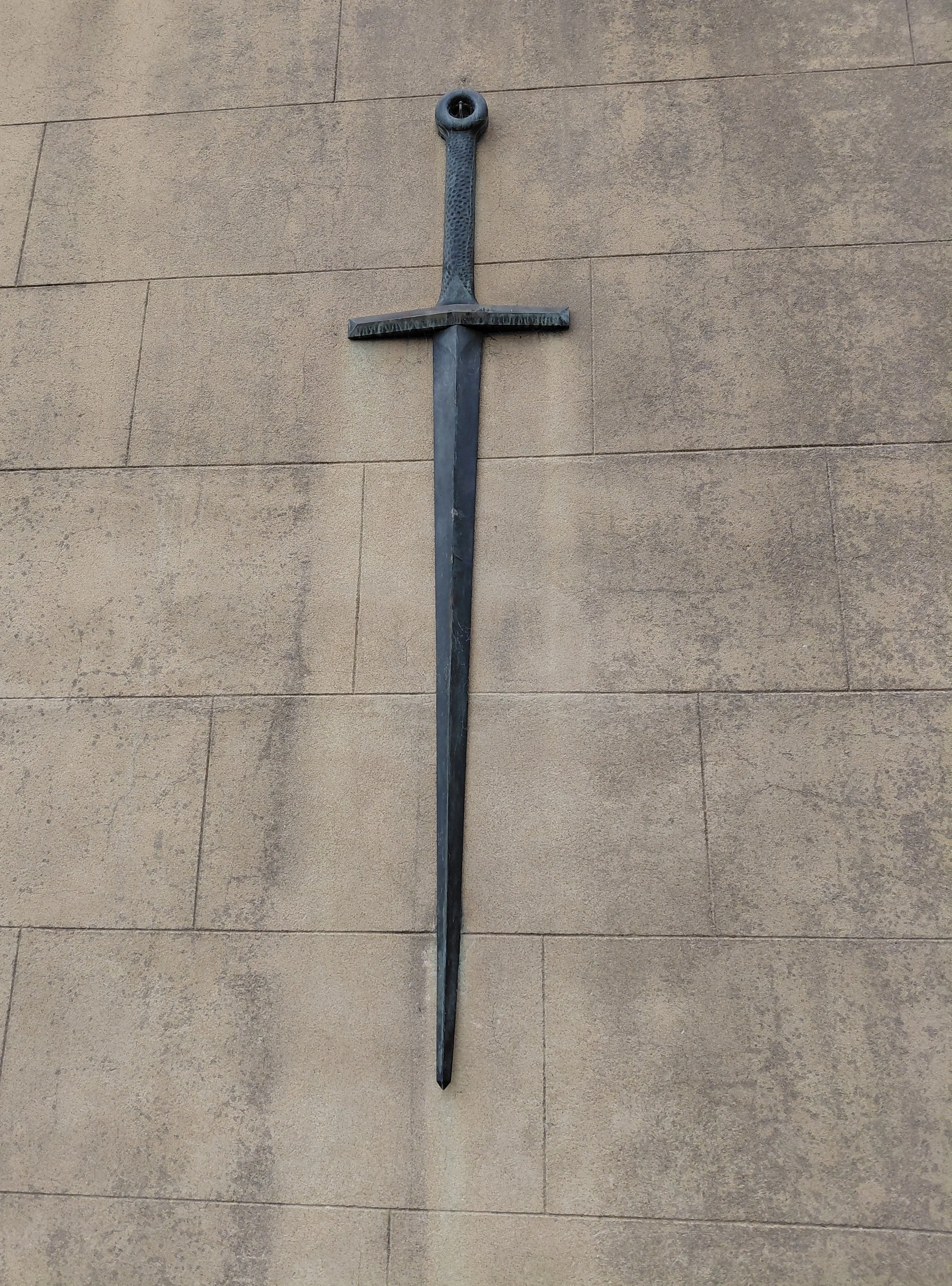
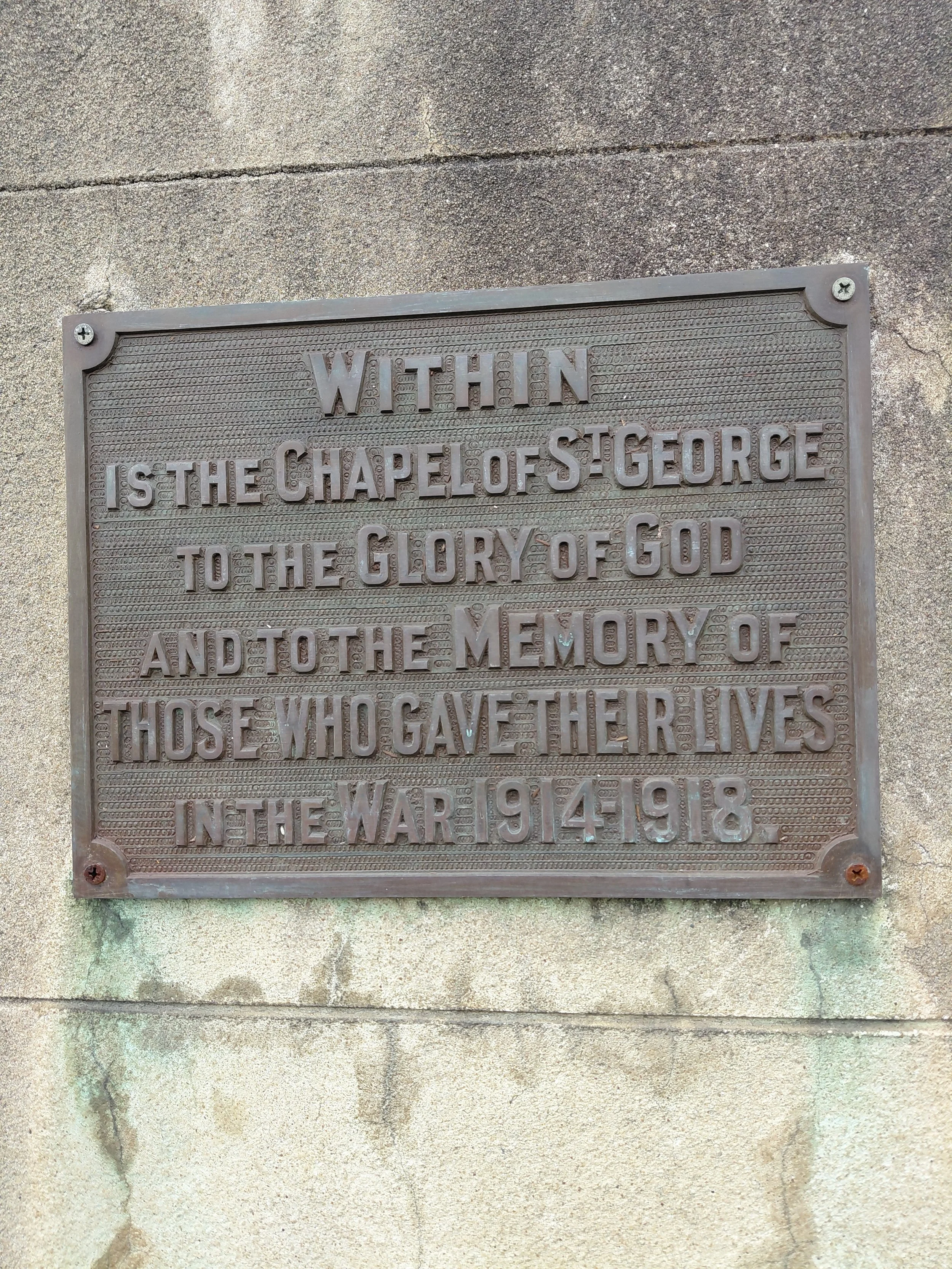
WWI Roll of Honour has the names of St Mark’s parishioners and others who gave their lives in the Great War. War historian and former St Mark’s parishioner, Dr. William Westerman, has written an excellent account of their life stories entitled, “Brothers.” A copy of it is available to read in the Chapel.
WWII Roll of Honour lists the names of St Mark’s parishioners and others who gave their lives during WWII.
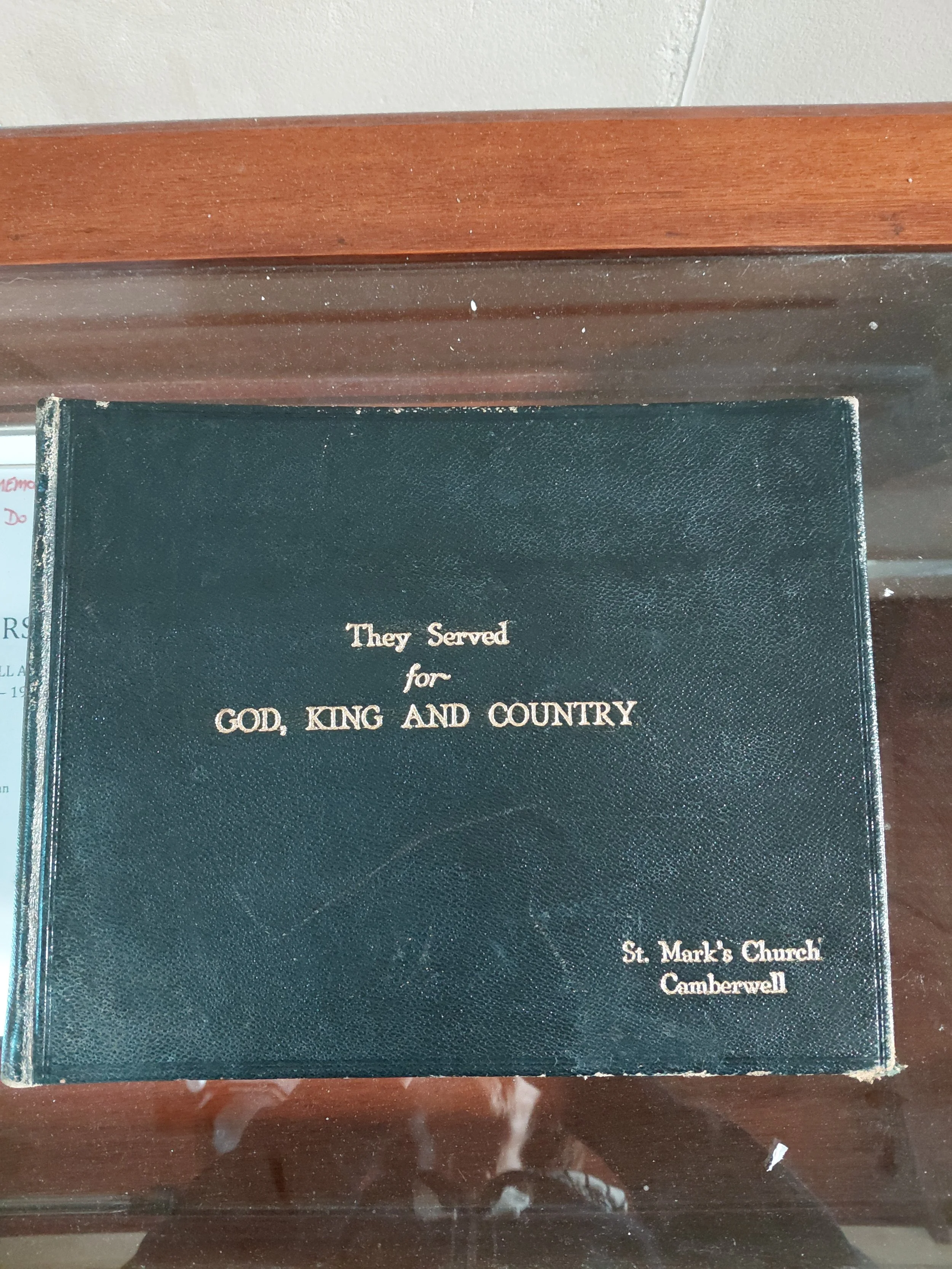
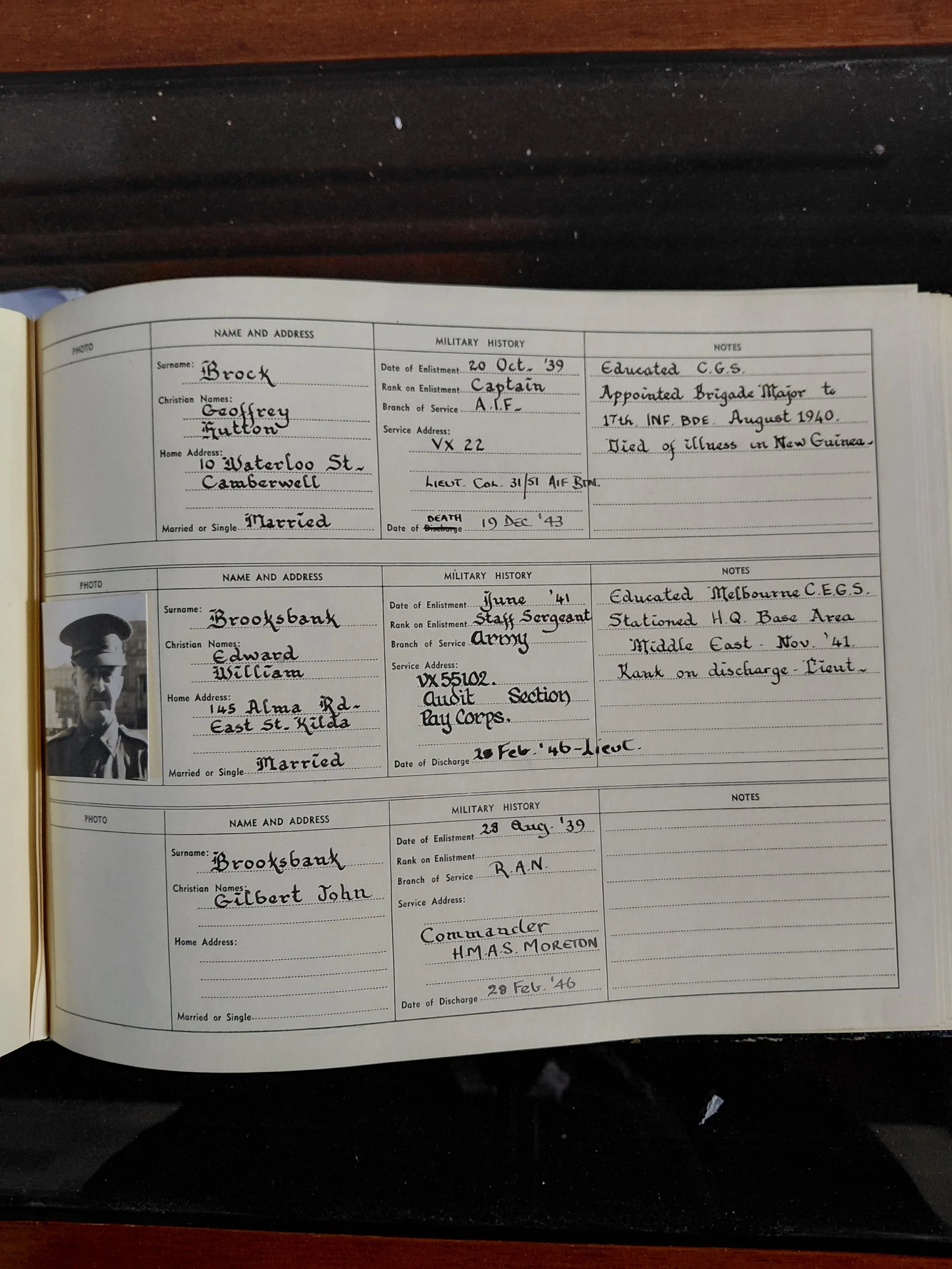
The Books of Remembrance have details about the St Mark’s parishioners who served in WWII, some of whom returned from the war.
24th Australian Infantry Battalion (AIF) Kooyong Regiment Honour Roll 1939-1945 The 24th Infantry Battalion Roll of Honour commemorates the men of that battalion who gave their lives in WWII. The Kooyong regiment served in both World Wars and although the men lived in the area, not all of them were St Mark’s parishioners.
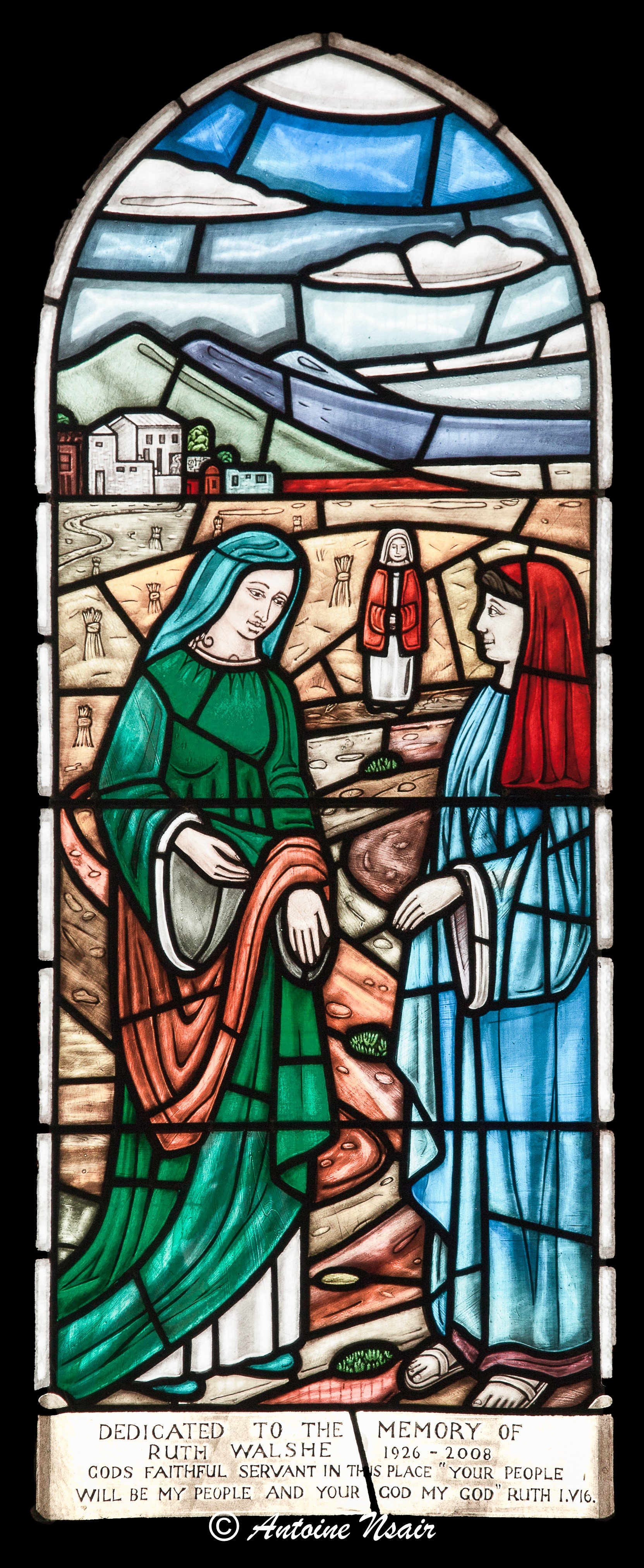
The Story of Ruth Window is dedicated to the memory of Ruth Walshe. It was installed in 2009.
Photos by Antoine Nsair are copyright and used with his kind permission.